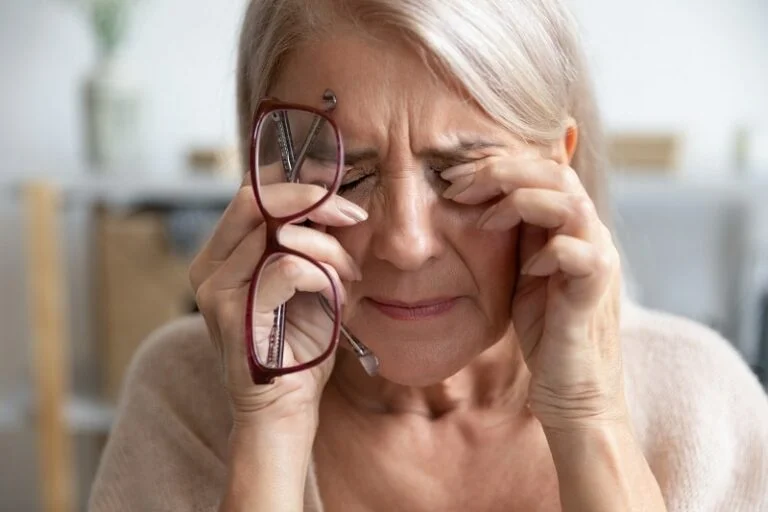
Blog Back Hearing Loss & Vision Loss Double The Risk For Dementia November 9, 2021 When you think of getting older, you might think of physical changes like hair turning gray or white, skin becoming more wrinkled, or increased difficulty in getting around. Hearing loss or vision loss may also come to mind—after all, it’s almost a stereotype for older people to wear reading glasses and hearing aids.In reality, many people do experience loss of hearing or eyesight as they age. In the United States, approximately one in three people from the age of 65 to 74 have age-related hearing loss, and about half of people older than 75 have difficulty hearing. In addition, approximately one in three people have some form of vision-reducing disease by the age of 65. It is clear that losing some hearing or eyesight as we age is far from rare.However, age-related hearing loss or vision loss can also affect your mind and memory. This was demonstrated in a new study that was published in the April 2021 online issue of Neurology, the medical journal of the American Academy of Neurology. The study found that people with both hearing and vision loss were twice as likely to have dementia than those who had normal seeing and hearing or only one impairment.The study followed 6,520 people between the ages of 58-101. The study participants were asked to complete a questionnaire that included questions about their hearing and vision. At the start of the study, 932 participants had normal hearing and vision, 2,957 had either visual or hearing impairment, and 2,631 reported that they had both. The researchers found that dementia was more than twice as common among those with both hearing and vision impairment at the beginning of the study.The study followed the participants during a six-year period. During those six years, 245 people developed dementia. After adjusting for factors like sex, income, and education, the researchers found that those with both hearing and vision impairment were twice as likely to develop dementia as those without impairment. They also found that participants with only one impairment were no more likely to develop dementia than those with normal hearing and seeing. Furthermore, when thinking tests were administered to the study participants, those with both hearing and vision impairment showed a steeper decline in scores.JinHyeong Jhoo, M.D., Ph.D., one of the study authors, noted that additional research is needed to better understand why having both hearing and vision loss increases the risk of dementia while having only one impairment does not. Researchers have hypothesized that the increased risk of dementia among this group may be related to greater social isolation and depression. People with only one impairment can often maintain their social lives to an extent, while those with both hearing and vision loss are more likely to experience social isolation and depression. In turn, social isolation and depression have been linked to a greater risk for dementia and cognitive decline.It is important to have your hearing and vision tested regularly so you can take steps to treat any conditions (like wearing hearing aids or glasses). To learn more about how you can protect yourself from dementia or to schedule an appointment with our hearing specialist, we welcome you to contact our office today. Share :
Author: sitemanager
The Unexpected Connection Between Hearing Loss, Menopause, And Tinnitus

Blog Back The Unexpected Connection Between Hearing Loss, Menopause, And Tinnitus October 25, 2021 October is Breast Cancer Awareness Month! To any of you who are battling breast cancer, have in the past, or have loved ones who have, we love and support you! We support ongoing medical research and remain optimistic that a cure is on the horizon.If we take a look at women’s health holistically, did you know that hearing loss, menopause, and hormone therapy have a connection? This is another field with ongoing research that is constantly revealing new connections and exploring how various factors are linked.Menopause and Hearing LossMenopause is a natural part of the aging process when a woman’s ovaries stop releasing an egg every month and menstruation stops. This is accompanied by a drop in the hormones estrogen and progesterone. Common symptoms of menopause include hot flashes, trouble sleeping, vaginal dryness, emotional changes, hair loss, changes in libido, sore breasts, and more.However, some women also experience changes in their hearing or develop tinnitus as menopause approaches. Current research indicates that this is related to the drop in estrogen, although scientists do not exactly understand how estrogen is linked to hearing. We have estrogen receptors in our ears and auditory pathways, but the exact connection between the hormone and hearing health is still unknown.A recent analysis, led by Dr. Sharon Curhan, MD, who is a physician and epidemiologist at Brigham and Women’s Hospital in Boston, reported that both animal and human studies have shown that low estrogen levels can impair hearing. This may be due to alterations in blood flow to the cochlea, which is a hollow tube in the inner ear. A separate study measured hearing and levels of estradiol, which is a form of estrogen. The study assessed 1,830 postmenopausal women and found that those with less estradiol were more likely to have hearing loss.Hormone Therapy, Hearing Loss, and TinnitusSince these studies have found that women with lower levels of estrogen are more likely to have hearing loss, it may seem logical to conclude that hormone therapy, which boosts hormone levels, could help to reduce the risk of hearing loss.However, Curhan’s team found the opposite to be true. In assessing data collected from more than 47,000 female nurses over a span of 22 years, they found that those who received a course of hormone therapy (HT) for five to ten years had a 15 percent higher risk of hearing loss than those who did not have HT. The team also concluded that the risk of hearing loss increased the longer the woman stayed on HT.Interestingly, research has found that hormone therapy can lower the rate of tinnitus in perimenopausal women, yet some women who start HT in perimenopause develop tinnitus. The connection between menopause, hormone therapy, and tinnitus is currently not fully understood.How to Protect Your HearingBecause some women develop sudden hearing loss, tinnitus, or vertigo when starting hormone therapy, be sure to monitor your hearing if you decide to begin hormone therapy. Dr. Curhan recommends that you stay on HT for only as long as needed. If you do notice changes in your hearing or if you develop sudden hearing loss, tinnitus, or vertigo, contact your medical provider immediately.Furthermore, you can protect your hearing and your overall health by living a healthy lifestyle. Studies have found that those who follow a diet close to the Mediterranean diet or DASH (Dietary Approaches to Stop Hypertension) have a lower risk of hearing loss. Be aware of medications that can affect your hearing health as well. Using the over-the-counter pain relievers acetaminophen and ibuprofen two or more times per week may be linked to hearing loss. Finally, avoid loud noises or constant background noise, get your hearing checked, and wear prescribed hearing aids regularly.To learn more about the connection between menopause, hearing loss, and tinnitus, we invite you to contact our hearing professional today. We look forward to providing you with the information you need. Share :
How To Advocate For Your Hearing Health
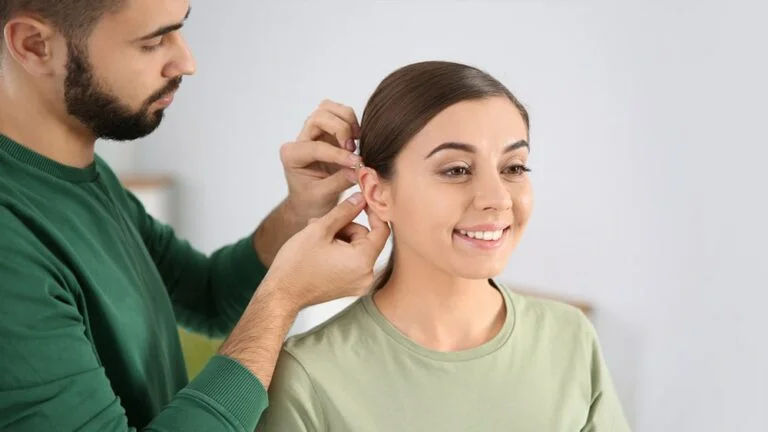
Blog Back How To Advocate For Your Hearing Health October 11, 2021 Happy October! October means many things—it’s finally starting to feel like autumn in many places, and Halloween is coming up. But did you know that October is also National Audiology Awareness Month? This is the perfect time to assess your own hearing health. Of course, you don’t need to evaluate your hearing health on your own. Seeing a hearing health specialist can be an important step in assessing your current hearing health and receiving any treatment you need.Before we talk about seeing a hearing health professional, however, let’s talk a little bit about your regular annual check-ups with your general practitioner. Do you go to your annual visits? If you do, does your doctor ask questions about your hearing health? They should! However, a recent national poll revealed that 80 percent of older adults said their doctors didn’t ask about their hearing health.Now, you might be thinking that a doctor neglecting to ask about hearing health isn’t really a big issue. If hearing loss were apparent, the patient would have brought it up, right? Well, not always. Doctors can often be in a rush due to packed schedules and limited time for appointments. In fact, I recall an annual appointment where my doctor cut me off from telling him about my health concerns and said he didn’t have time to listen to all of them! (Don’t worry—I found a new doctor after that experience.)Because of the constant push to move on to the next appointment, some patients might not bring up their hearing health, even if they have concerns about it. The rush from appointment to appointment is also a likely reason that many doctors don’t inquire about hearing health on their own, without prodding from the patient.Whatever the reason, it is concerning that such a large portion of older adults are not being asked about their hearing health at their annual check-ups. Approximately one in three adults between the ages of 65 and 74 has age-related hearing loss, and nearly half of adults over the age of 75 have difficulty hearing. This makes it likely that a good portion of older adults whose doctors do not ask about their hearing health do have hearing loss.Untreated hearing loss can cause challenges in communication, which can lead to strained relationships with family and friends, difficulties at work, and a new aversion to social situations. In addition, untreated hearing loss is linked to several other health problems, including a greater risk for depression, anxiety, social isolation, cognitive decline and dementia, and falls.So, what can you do to protect yourself from these health problems? Learn to advocate for yourself and your hearing health! When you go to annual check-ups, talk with your doctor about your hearing health. Take an online hearing assessment to see if you might have hearing loss. (Several free hearing tests are available, like this one, if you do a quick online search.) If you believe you might have hearing loss or if you simply want to get your hearing checked by a professional, contact a hearing specialist. They will be able to conduct a hearing test, evaluate your results, and recommend the treatment you need. If you have a hearing aid, wear it! Don’t be afraid to talk about hearing loss with others, whether it’s your doctor or your friends.To learn more about how you can advocate for your hearing health (especially during Audiology Awareness Month!) or to set up an appointment with our hearing professional, we welcome you to contact us today. We look forward to assisting you. Share :
Do You Have Trouble Hearing Clearly—But Are Not Sure If You Have Hearing Loss?

Blog Back Do You Have Trouble Hearing Clearly—But Are Not Sure If You Have Hearing Loss? September 22, 2021 Hearing loss may seem like a black and white issue—either you have hearing loss or you have normal hearing. You would think hearing loss would be fairly easy to self-diagnose, too, since you would notice when you cannot hear properly. However, there are some gray, in-between areas when it comes to hearing loss. You might feel that you do not have hearing loss because you can hear, yet you cannot hear clearly. That’s exactly what this article will discuss.You Can Hear, But Not ClearlySo, what does it mean if you can hear, but not clearly? Another common way this is described is that you can hear a conversation, but you have difficulty understanding what is said. In many cases, this is a sign of high-frequency hearing loss. This means that you can hear and understand low-pitched sounds, but you have difficulty hearing high-pitched sounds.High-frequency hearing loss can make it challenging to understand speech because consonant sounds (like Th, Sh, F, S, P, K, and V) are high-pitched. Since vowel sounds (A, E, I, O, and U) are low-pitched, you can probably hear the vowels but not the consonants. This combination means you will know that someone is speaking and you might be able to make out part of it, but because you cannot hear all of the consonant sounds, you may have difficulty understanding what is being said.High-frequency hearing loss also makes it more difficult to hear high-pitched voices, especially those of women and children. In addition, excessive background noise can make it even more challenging to understand speech if you have high-frequency hearing loss. Here are a few more common signs of high-frequency hearing loss: You struggle to follow conversations You often feel like people are mumbling You have difficulty understanding speech on television, even if you turn up the volume You do not enjoy music because it sounds distorted, especially at higher volumes You often mishear women’s and children’s voices You struggle to understand speech on the phone You find yourself giving inappropriate answers to questions or missing the punchline of jokes Your family members and friends feel like you aren’t listening to them Your spouse or family members accuse you of having “selective hearing” If you recognize these symptoms, it’s time to have your hearing checked by a hearing professional. They will be able to diagnose any hearing loss, including high-frequency hearing loss, and provide you with the solutions you need.You Pass a Hearing Test But Still Can’t Hear ProperlyIn most cases, a professional hearing test will help detect and diagnose any hearing loss. Believe it or not, however, there are times when you can pass a hearing test and be told that you have normal hearing, yet you still feel that you cannot hear properly. There are a few reasons this might happen: Hidden Hearing LossHidden hearing loss is hearing loss that is not detectable with standard hearing tests. This is because standard hearing loss focuses on the ears, while hidden hearing loss is due to an issue in the brain. Auditory Processing Disorders (APD)If you can hear sounds but have difficulty understanding, you may have an auditory processing disorder. This is caused by the nervous system struggling to interpret sound coming in from the ears. Attention Deficit Disorder (ADD)Attention deficit hyperactivity disorder (ADD) can make it difficult to understand sound as well. This is because the brain struggles to keep up with all of the sensory input it experiences, especially noise. It is also possible to have both ADD or autism and an auditory processing disorder. If you feel like you have difficulty hearing or understanding sounds, do not hesitate to contact your hearing care professional. We are here to assist you and provide the personalized care you need. Share :
Hearing Loss Can Change You, But Did You Know It Can Change Your Brain?
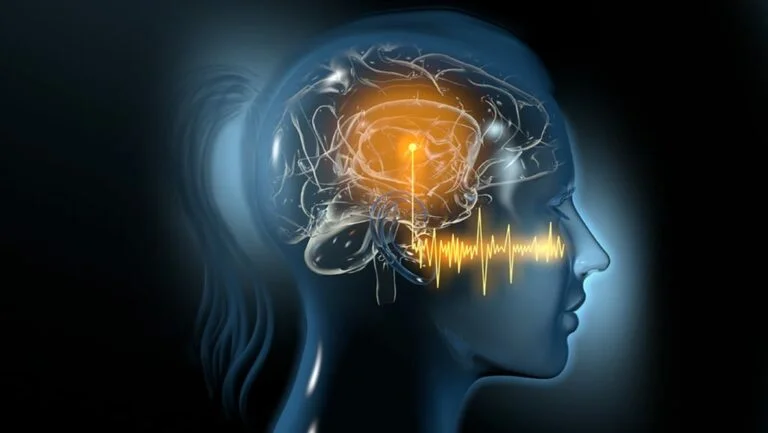
Blog Back Hearing Loss Can Change You, But Did You Know It Can Change Your Brain? September 9, 2021 Hearing loss can bring a lot of change to your life. Of course, there’s the major change of not being able to hear all of the sounds that you once did. Untreated hearing loss can also alter your relationships with your spouse, family, friends, and coworkers, as you can no longer hear and understand conversations clearly. You may often ask people to repeat themselves or talk louder, which can lead to frustration on both sides. You might even find yourself avoiding social situations, especially in loud settings, to avoid problems with hearing and understanding conversation. You may not be able to enjoy sounds you once did, like music, TV, and nature sounds. If you decide to treat your hearing loss and wear hearing aids, that is a change too.All of these changes are real and can create shifts in your life. However, did you know that hearing loss can also change your brain? Recent research, conducted over several years by Johns Hopkins University, The Ohio State University, and other institutions, has revealed that hearing loss causes changes to your brain that have been linked to cognitive decline and even dementia.The greatest takeaway message from this research is that if you believe you may be experiencing hearing loss, treat your hearing loss! Getting a hearing test is painless and usually takes half an hour or less. From this hearing test, your hearing professional will be able to diagnose any hearing loss and present you with options to treat your hearing loss. Hearing aids are a common and effective way to treat hearing loss. In fact, studies have shown that treating hearing loss by wearing hearing aids reduces memory loss and is associated with a delayed diagnosis of dementia and Alzheimer’s disease. It is not clear yet whether using hearing aids can completely prevent the brain changes that are linked to memory loss and cognitive decline, but it can slow this process.Stanford University’s clinical instructor of otolaryngology, Yona Vaisbuch, MD, explained in the 2018 Stanford Medicine publication Listening that, “With time, those brain changes will not be reversible. That’s why we need to treat hearing loss as soon as possible.” Likewise, Dr. Frank Lin of Johns Hopkins recommends treating hearing loss “sooner rather than later…before these brain structural changes take place.” As noted by Dr. Vaisbuch, the brain changes that occur due to untreated hearing loss can become permanent. At that point, just beginning to wear hearing aids may be too little, too late when it comes to brain structure and cognitive decline.Of course, simply having your hearing tested and getting hearing aids is not enough if you do not actually use your hearing aids! Wearing your hearing aids all day, every day is the best way to get used to them and enjoy their benefits. If you feel something is wrong with your hearing aids—for example, if they are uncomfortable or if the settings need to be adjusted—be sure to reach out to your hearing aid professional.If you believe that you might have hearing loss, or if you want to learn more about how treating hearing loss can prevent changes to your brain, we invite you to contact our hearing practice today. We are eager to speak with you! Share :
Understanding Listening Fatigue: Why Hearing Can Be So Tiring

Blog Back Understanding Listening Fatigue: Why Hearing Can Be So Tiring August 24, 2021 If you broke your arm, would you go to the store, buy some plaster, and put a cast on your broken arm yourself? Of course not! You would go to a doctor who would be sure to set the broken bone correctly and apply the cast in a way that will be of most benefit to your arm’s healing.In the same way, you cannot expect your hearing aids to function optimally without the help of a professional. There are many different types of hearing aids available now—some better than others—and to ensure that you get the right type of hearing aids for you and that they fit correctly, you will need to attend a hearing aid fitting with a trained hearing professional. Here are 4 reasons why it is essential to have a professional hearing aid fitting: Not all hearing aids are created equal.Just as with all other products, hearing aids are available in a wide variety. Some are simple, while others are very technologically advanced. The type of hearing aid you will need depends on the type and severity of hearing loss you suffer from. Personal preferences can also help determine which hearing aid is right for you.Your hearing professional will take all of these factors into account when helping you find the hearing aid that is best for you. Cost also plays a role, so be sure to discuss your cost expectations with your hearing aid professional. (Just remember that you often get what you pay for, so it might not be worth it to choose the least expensive option.)Remember, there will be an adjustment period with your new hearing aids, even if you choose top-of-the-line devices and have them fitted by a professional. If your hearing aids are uncomfortable, however, or if you still experience trouble hearing, you may need an adjustment. Do not hesitate to contact your hearing aid professional for assistance. There are various types and degrees of hearing loss.As mentioned, the type of hearing loss you experience will play a part in determining which type of hearing aid you need and how your device is adjusted by your hearing professional. It is important that you are aware of the type and severity of hearing loss you experience so you can make an educated decision on what kind of hearing aids you will use. Your hearing aid professional will help you understand your hearing loss and will assist you in deciding on the type of hearing aid that is best for your specific needs. You will need to decide to wear your hearing aids.You could choose the best of the best when it comes to hearing aids, but they will do you no good if you do not wear them. It is a personal decision and commitment to wear hearing aids every day and enjoy the sounds you would miss without them. While it may seem strange at first to wear hearing aids every day, remember that untreated hearing loss can lead to a variety of other medical problems, including depression, anxiety, social isolation, falls, and cognitive decline.Again, if your hearing aids are uncomfortable or the settings seem off after your professional fitting, contact your hearing aid specialist. They can help you with adjustments. A trained professional is an irreplaceable resource.Your hearing aid fitting will be with a hearing professional. Be sure to take advantage of your time with them. Ask any questions that you have and listen to all of their instruction and advice. They will be able to help you make informed decisions about your hearing aids. They can also answer your questions and ease any concerns you might have. Remember that your hearing professional has your best interests at heart. If you believe that you or a loved one is experiencing hearing loss, it may be time for hearing aids. To learn more about professional hearing aid fittings and to schedule your appointment, we invite you to contact our hearing professional today. Share :