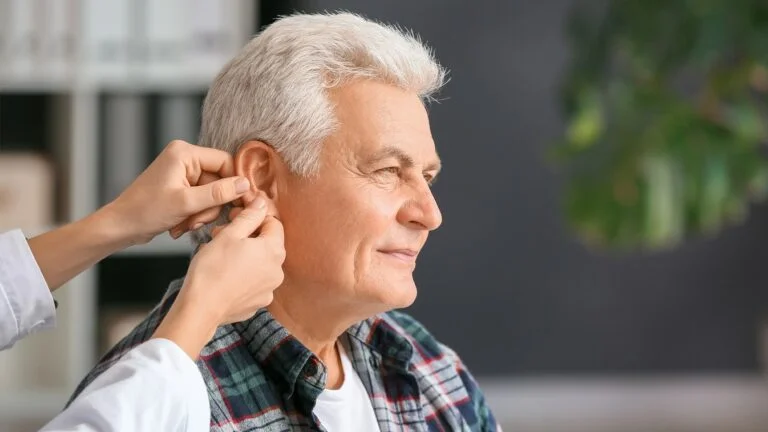
Blog Back 4 Easy Tips For Getting Used To New Hearing Aids August 11, 2021 Are you considering committing to new hearing aids soon? Perhaps you have recently realized that you are experiencing hearing loss and you are considering your first set of hearing aids. Maybe you have worn hearing aids for years now and are contemplating getting a new set (especially with all of the new hearing aids coming out recently). No matter what your situation is, it can be a big change to get used to wearing new hearing aids.Here are some simple, effective tips for getting used to new hearing aids: Don’t hesitate to speak up.During your hearing aid fitting, don’t be afraid to speak up if you have any concerns or questions about your new hearing aids. Your hearing aid professional is there to answer all of your questions and make sure that your hearing aids are as effective as possible. If you are worried about the quality of sound or need any adjustments, be sure to speak up.Don’t forget that adjustments can be made later as well, so it isn’t a “one and done” situation. As you get used to your new hearing aids over the coming days and weeks, make note of any specific adjustments that need to be made or any questions you have. This will make it easy to give your hearing aid professional good feedback at your follow-up appointment. Wear your new hearing aids every day.If you never wear your new hearing aids, you’ll never get used to them! Wearing your hearing aids every day—from the time you wake up to the time you go to bed—is the best way to get used to them. In addition, wearing your hearing aids every day will help you notice any settings that need to be adjusted at your follow-up appointment with your hearing aid specialist. Have realistic expectations.Yes, hearing aids can indeed be life changing. They can enable you to hear sounds that you haven’t heard in some time. However, wearing hearing aids isn’t the same as having your hearing perfectly restored in an instant. You may still need to use strategies like seeking out visual cues and choosing preferred seating in noisy environments to ensure the best understanding of speech in different environments. Be patient.As noted above, wearing new hearing aids isn’t a “one and done” situation. It may take a few adjustments and appointments with your hearing aid specialist before you get all of the settings just right. The adjustment for you may take some time as well. You may not be used to wearing something on or in your ears every day, and your brain will have to get used to hearing more sounds again, too. Your hearing loss probably happened gradually, and it will also be a gradual process to get used to your new hearing aids. With a little time, however, you will wonder how you ever lived without your new hearing aids! To learn more about how you can get used to new hearing aids or to schedule an appointment with our hearing aid professional, we welcome you to contact our office today. Share :
Author: sitemanager
Back New Hearing Aid Manufacturers Offer Devices Online—Here’s What You Need To Know

Blog Back Back New Hearing Aid Manufacturers Offer Devices Online—Here’s What You Need To Know July 21, 2021 If you had been diagnosed with hearing loss 20 years ago, you would have had only one choice: purchase hearing aids through your audiologist or hearing aid professional. That has simply been the way things are done for many, many years—but change is on the horizon. In fact, in many ways, change is already here when it comes to purchasing hearing aids and other hearing devices.Beginning this year, several companies are now offering hearing aids available for online purchase. These include Bose, who created their own self-fitted hearing aid, and Walgreens, who partnered with hearing aid maker Lexie Hearing. In addition, highly recognizable companies like Apple, Samsung, and Panasonic will soon join them in becoming hearing aid manufacturers. According to online rumors, even Google has considered getting in the hearing aid game!So, what does this mean for you as a consumer? Here are a few things to keep in mind as you consider this news: You have options for purchasing hearing aids.As mentioned above, options for getting hearing aids in the past were pretty limited. Now, you have the choice to purchase a hearing aid through your audiology professional, purchase your devices online, or (in the near future) purchase your hearing aids over-the-counter (OTC).This variety of purchasing options also brings more variety in pricing. Top-of-the-line, custom hearing aids fitted by your audiology professional can cost thousands of dollars. (It should be kept in mind that hearing aid professionals offer lower-cost options as well.) The current online offerings from Bose and Walgreens fall in the $800-850 range. Over-the-counter hearing aids are likely to bring additional lower-cost devices. This allows you to find the hearing aid that is right for your budget as well as your hearing needs. Not all hearing devices are hearing aids.When you think of managing hearing loss, hearing aids are probably the first solution to come to mind. However, several types of devices are now available, with more coming thanks to continuing audiology research and technological innovation.For example, there are now headphones and earbuds that correct audio for hearing loss, soundbars that do the same, apps that help you hear better in noise, apps that allow you to personalize your sound experience, and much more. If you have mild hearing loss, these types of devices and apps may be able to help you hear better without the need for hearing aids. Audiological research is advancing quickly.From the advancements in hearing aids and other hearing devices in the last few years, it is apparent that audiological research is moving forward quickly now—and it’s being taken seriously. Companies that never previously ventured into the audiological field are now doing so confidently. In addition, developing technologies like machine learning and artificial intelligence are poised to further advance audiology in the coming years. Your hearing professional can still guide you through the process.Whether you’re feeling a little overwhelmed by all of the new choices or simply want to make sure you get the option that’s best for you and your needs, an audiology professional is there to guide you through. Your audiology professional will test your hearing and explain the various options you have, as well as the pros and cons of each. This can help make it easier to see which option is the best fit for you. To learn more about new hearing aid availability and other hearing devices, we invite you to contact our hearing professional today. We are eager to assist you. Share :
Here’s Why You Need An In-Person Hearing Test (Even Though You May Be Able To Buy Hearing Aids Online)
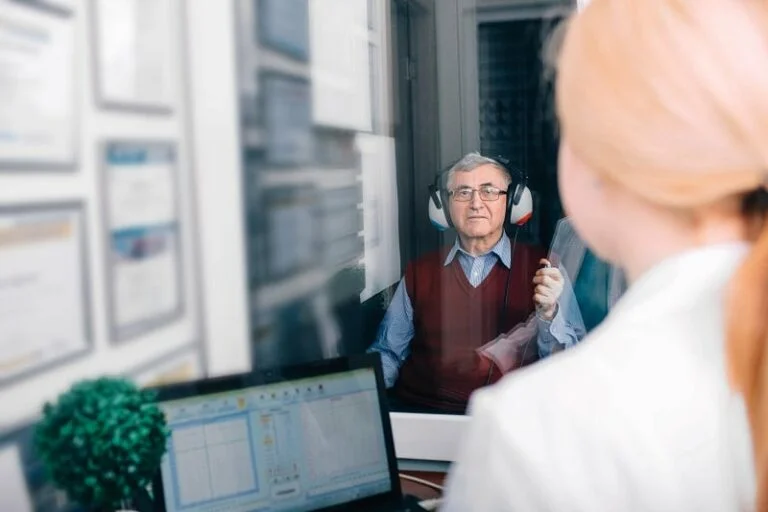
Blog Back Here’s Why You Need An In-Person Hearing Test (Even Though You May Be Able To Buy Hearing Aids Online) July 9, 2021 Odds are good that you’re familiar with online shopping. Nowadays, even hearing aids are available for purchase online! That’s right—companies like Bose and Walgreens began offering online purchase for hearing aids (in certain states) this year. So, if you can purchase your hearing aids online, then you no longer need to go to your hearing professional’s office for an in-person hearing test, right? Wrong!The truth is that even with advancing technology and increased online offerings, there is nothing that can compare to an in-person hearing test. In-person hearing tests are essential for getting an accurate assessment of your hearing ability and evaluating whether you would benefit from treatment like hearing aids.If you aren’t convinced, here are just a few reasons why it’s important to have a formal, in-personal hearing evaluation: There are different types of hearing loss. The online hearing tests used to purchase and fit hearing aids online may not be able to detect all types of hearing loss and may not accurately fit your devices based on the specific type of hearing loss. There are varying degrees of hearing loss—and hearing loss can vary between your ears. Again, online hearing tests may not be able to detect all degrees of hearing loss. If you have mild hearing loss, it may not be apparent in an online test, yet it would be noticed by an audiology professional in a formal hearing evaluation. Furthermore, sometimes your ears have different degrees of hearing loss. This is important to take into account when fitting hearing aids. You should establish a baseline for your hearing. The Mayo Clinic recommends regular hearing evaluations for adults to establish a baseline. This will make it easier in the future to determine whether you are experiencing hearing loss and whether it’s time for hearing aids. Hearing loss can signal other health problems. In some cases, hearing loss is an early warning sign of a serious health condition, such as cardiovascular disease or diabetes. An online hearing test will not consider your overall health. Untreated hearing loss can lead to additional health problems. If your hearing loss goes untreated, you are at higher risk for depression, anxiety, loneliness and social isolation, falls, cognitive decline, and dementia. By having regular hearing evaluations and treating any diagnosed hearing loss, you can avoid these serious consequences. Hearing evaluations are painless. “No pain, no gain,” doesn’t apply to hearing tests. An in-personal hearing test simply checks your hearing ability. You will wear headphones and listen for tones to evaluate how well you hear sound volume and sound pitch. Your hearing professional may also conduct a painless physical examination of your ears to check for ear wax impaction or infection. Hearing tests usually take less than an hour, and they might be free, too (depending on your insurance). And maybe the best reason of all? If your hearing test shows that you do not have hearing loss, you can say, “I told you so!” to anyone who told you that you might not be hearing very well. Joking aside, regular in-person hearing evaluations are essential to ensuring that any hearing loss is treated in a timely manner and in a way that best fits your specific needs.To learn more about the importance of in-person hearing evaluations and to schedule your next hearing test, we invite you to contact our hearing professional today. We are eager to hear from you! Share :
Considering Traveling By Plane This Summer? Here Is Some Information About Air Travel And Ear Pain (And What You Can Do To Avoid It).

Blog Back Considering Traveling By Plane This Summer? Here Is Some Information About Air Travel And Ear Pain (And What You Can Do To Avoid It). June 23, 2021 Many of us didn’t travel much in 2020, especially by airplane. It can be exciting to think about flying to a new destination (or an old favorite) again soon, but air travel isn’t all sunshine and flowers. For one thing, you never know how long the security line will be at the airport. Then there’s the issue of packing—how can you possibly fit everything you need into just one or two bags? And once you get on the airplane and you’re heading up into the sky, there’s the dreaded ear pain. Here are some easy tips to avoid ear pain while traveling by air.What Causes Ear Pain during Air Travel?The issue with ear pain and air travel is due to air pressure. When the air pressure inside and outside the inner ear are the same, as they usually are, you do not have ear pain. But when you rapidly change altitude, as you do when traveling by plane, the pressure inside and outside of the inner ear does not have time to equalize. This is what causes ear pain while traveling by air, and it is called ear barotrauma.How Can You Prevent Ear Pain during Air Travel?The key is to help the air pressure equalize inside and outside of the inner ear. This is the job of the Eustachian tube, which ensures that the air in the middle ear is being constantly replenished. That air is then absorbed into the membranes of the inner ear. To help this process, you can introduce as much air as possible until the pressure equalizes. Here are a few ways to do that: Swallow.When you swallow, you might hear a clicking or popping sound. That sound is a tiny bubble of air that has moved from the back of the nose into the inner ear via the Eustachian tube. During air travel, opening the Eustachian tube more frequently by swallowing helps to accommodate the change in air pressure. Chew gum or suck on hard candy.Chewing gum or sucking on hard candy can stimulate more frequent swallowing. This, in turn, opens the Eustachian tube and helps to equalize the air pressure. Try the Valsalva maneuver.More commonly known as “clearing your ears,” the Valsalva maneuver opens the Eustachian tube and helps to equalize the air pressure. To do this, take a mouthful of air, close your mouth, pinch your nostrils shut, and gently force air out until your ears pop. do not try this maneuver if you have a cold or allergies because it could cause an ear infection. Instead, you can try the Toynbee maneuver. Close your mouth and nose, and then swallow several times until the pressure equalizes. Both of these techniques can be repeated as necessary. Here are a few more simple things you can do to prevent ear pain during air travel: If you can, stay awake during takeoff (ascent) and landing (descent). Drink plenty of fluids both before and during your flight to stay hydrated. Yawn. Use nasal spray one hour prior to landing and only as needed. Overusing nasal sprays can cause more congestion. Take a nasal decongestant one hour before landing, as well as after your flight until your ears normalize. If you have young children, help them prevent ear pain by giving them candy such as a lollipop or having them drink through a straw or blow bubbles through a straw. If you have an infant, give them a pacifier or feed them during takeoff and landing. If you are ill with a cold, the flu, or allergies, you may want to consider changing your travel plans. Your illness can cause a blockage in the Eustachian tube, which makes it more difficult or even impossible for the air pressure to equalize. This can lead to a ruptured eardrum or severe ear infection, which can lead to hearing loss or ear damage. To learn more about how you can prevent ear pain while traveling by airplane, we welcome you to contact our hearing practice today. We are eager to help! Share :
1 In 20 People Has Disabling Hearing Loss. Are You One Of Them?

Blog Back 1 In 20 People Has Disabling Hearing Loss. Are You One Of Them? June 9, 2021 Imagine you decide to throw a party and you invite 20 of your closest friends and family members. Statistically speaking, it is likely that when those 20 people are in the room, at least one of them has disabling hearing loss. That is what the World Health Organization (WHO) found in a recent study: more than one in 20 people has disabling hearing loss.Disabling hearing loss means that the better-hearing ear has moderate or worse hearing loss, with the hearing loss affecting the person’s quality of life. While illustrative exercises like imagining your 20 closest friends at a party can help you understand the shocking commonality of disabling hearing loss, the truth is that hearing loss does not equally affect the entire population of the world. 432 million adults and 34 million children have disabling hearing loss, according to the WHO, and most of the sufferers live in poor- and middle-income countries.It is projected that by 2050, more than 900 million people worldwide will suffer from significant hearing impairment. While there is little you can do as an individual to prevent hearing loss worldwide, you can take steps to protect your own hearing—and encourage your loved ones to do the same. Here are some simple yet effective ways to protect your hearing health: Avoid excessive loud noises. Wear ear protection when exposed to loud noise, such as at construction sites, factories, while doing yard work, etc. Keep your music at a reasonable volume. Listening to loud music can, over time, damage your hearing. Get a hearing evaluation if you believe you might have hearing loss. This ensures that any hearing loss is identified and treated. With one in 20 people now suffering from disabling hearing loss and that number expected to double in the next 30 years, it is not unlikely that you will experience hearing loss at some point. The numbers of people with age-related hearing loss are even greater than those with disabling hearing loss; one in three people between the ages of 65-75 years has hearing loss, and nearly half of those over the age of 75 have difficulty hearing.It is important that you schedule a hearing evaluation with your hearing professional as soon as you notice any signs of hearing loss. Untreated hearing loss has been linked to depression, social isolation, anxiety, more frequent falls, dementia, and more. By seeking professional treatment, you can avoid these problems and start hearing better thanks to new hearing technology, including hearing aids.Whether your hearing loss is caused by age, excessive loud noises, illness, or any other cause, you can rest assured that hearing technology is advancing quickly. Hearing aids are no longer bulky and difficult to adjust; today’s hearing aids are small, discreet, and come in a variety of colors and designs. Modern hearing aids also come with a variety of features that make them easier to use and integrate into your daily life, like Bluetooth connectivity, rechargeable batteries, and more.For more information about hearing loss and to schedule an appointment with our skilled hearing professional, we welcome you to contact our hearing practice today. We look forward to caring for you. Share :
Think You May Have Hearing Loss? Here Is What To Do
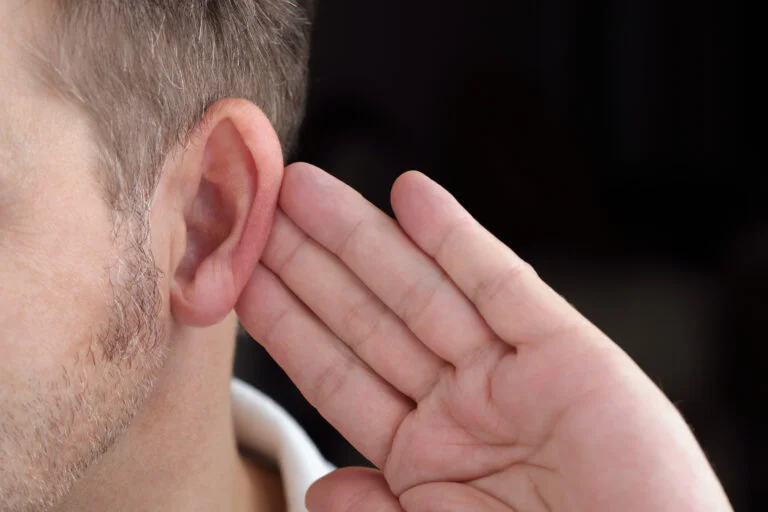
Blog Back Think You May Have Hearing Loss? Here Is What To Do May 20, 2021 477 million: that’s the number of people worldwide who live with hearing loss. Among people 75 and older, nearly half have hearing loss. These numbers make it clear that hearing loss is far from uncommon, and it can happen to anyone. So, if you think you might have hearing loss, what should you do? Here are six simple steps you should take if you think you have hearing loss: 1) Know the signs. While every person experiences hearing loss a little differently, there are common symptoms you can watch out for to know whether you may have hearing loss. Common signs of hearing loss include: Frequently asking people to repeat themselves Turning the TV or music to a volume that other people find loud Difficulty understanding conversation in noisy places Trouble hearing women’s and children’s voices Difficulty hearing on the phone Feeling like other people are frequently mumbling Ringing in the ears Avoiding social situations you once enjoyed Other people, such as your spouse, friends, or family members, telling you that you might have hearing loss 2) Have your hearing tested. If you have noticed the signs of hearing loss, or if a loved one has suggested you might have hearing loss, the next step is to have your hearing tested. You can start with an online test (many online hearing tests are free), or you can go to a hearing health professional. The benefit of seeing a professional for a hearing test is they will be able to explain your results and what action should be taken. 3) Decide whether you want to treat your hearing loss. If the results of your hearing test reveal that you do have hearing loss, it is time to decide what you’re going to do about it. You could ignore the problem, but this is not recommended. The effects of untreated hearing loss include social ones, like not hearing important information, feeling lonely when you cannot have conversations as you once did, mishearing conversations (especially in noisy environments), and feeling frustrated in social situations. Untreated hearing loss can also affect your overall health; those with untreated hearing loss are at a greater risk for depression, anxiety, falls, and dementia. Treating your hearing loss, on the other hand, can lower your risk for all of these problems. It can also help you enjoy auditory experiences you may have forgotten about, like hearing the birds outside your window or the babbling sound of the little stream that runs alongside your favorite nature walk. You will also be able to understand conversations with your loved ones and feel comfortable and confident in social situations. 4) See a hearing professional. If you did not see a hearing health professional for your hearing test, now is the time to schedule an appointment with an audiologist, hearing aid specialist, or ENT. The hearing professional will be able to determine how severe the hearing loss is and recommend the best treatment for your specific needs. 5) Ask to try hearing aids. Hearing aids are a common and effective way to treat hearing loss. Did you know that most states require a 30- or 60-day trial period for hearing aids? This allows you enough time to try out your hearing aids and see how they are working for you. Your hearing professional will help you with any adjustments you need, and they can also recommend different hearing aids if you feel you didn’t get the right fit the first time. Although over-the-counter hearing aids are now available, the best choice is often to get personalized ones from a hearing professional. With this option, your hearing professional can make certain that the hearing aids are tailored to your specific needs and preferences. 6) Enjoy hearing well. Most people who try hearing aids report that they enjoy many activities so much more now—from listening to music to conversing with friends, and from hearing the sounds of nature to watching TV without turning the volume up to the max. In addition, you can rest assured that you have lowered your risk for the health problems associated with untreated hearing loss. Now, that’s something to celebrate! If you would like more information or think you might have hearing loss, we invite you to contact our hearing practice today. We look forward to taking care of you. Share :